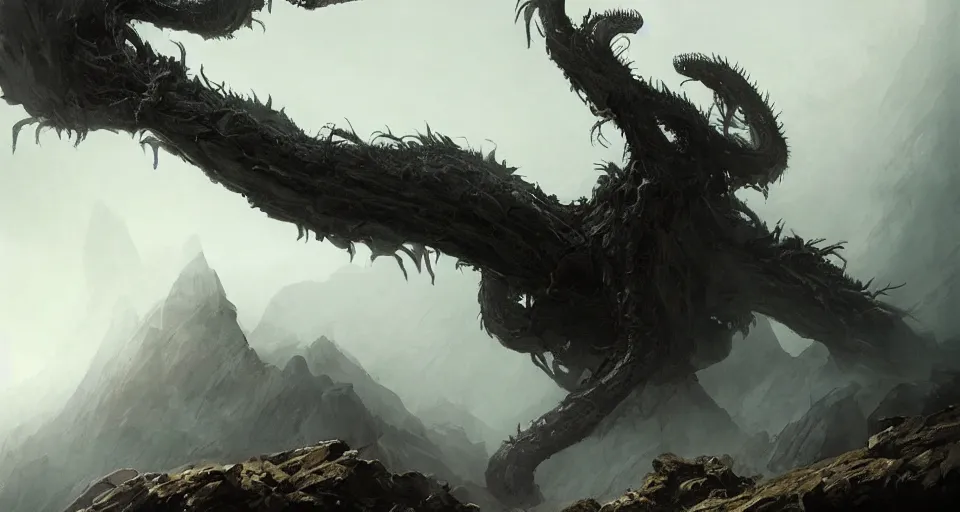
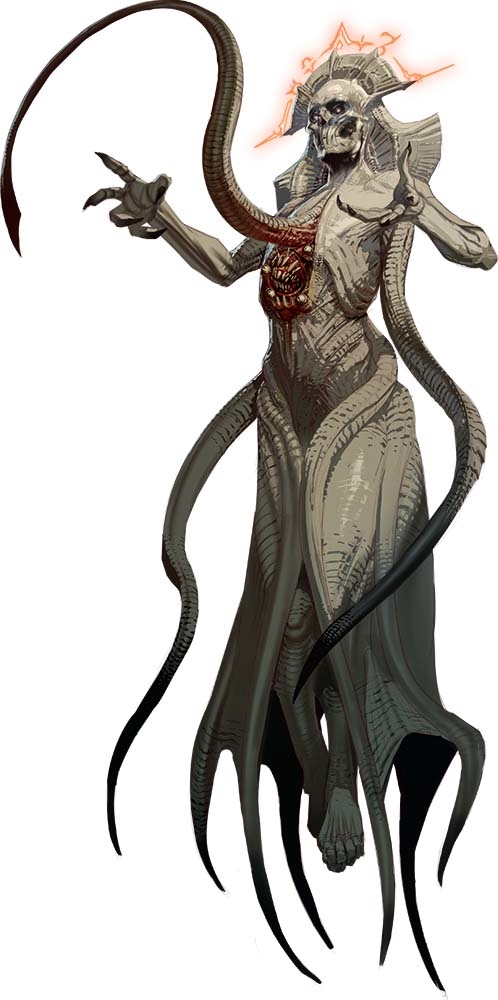
the diadem application.
Player Information
Player: Jen
Contact: aurajen @ discord/plurk, or PM this journal
Invitation OR characters played: Mod invite!
Are you over 18?: Yes
Character Information
Character: Henry Creel
Canon: Almost immediately after his banishment to the Upside Down.
Age: Canon is inconsistent about this, but the best estimates are anywhere from early to mid-thirties. I'm headcanoning 35 if he is ICly asked.
History: Link
Possessions: A (ruined) white orderly uniform.
Weapon: He relies on his abilities for offense, so he's not qualified to bring a weapon.
Powers/Abilities:
TELEKINESIS - The ability to move solid objects with his mind! Henry is able to do this with both small objects and large, showing very little strain with either. He's able to manipulate them with relative precision, as well.
PSIONIC BLAST - Basically using his telekinesis in a much more forceful, offensive way, Henry is able to create a blast of force with his mind to push objects away or otherwise break them.
TELEPATHY - At its most simplistic, Henry can read the thoughts and emotions of others. When he was younger, he'd pick up stronger instances without even meaning to, though now, as an adult more in control of his abilities, he can shut out outside "minds" if things get too loud or overwhelming. Passively, however, you can always assume he'd be getting passing impressions of someone's emotions.
Moreover, Henry can also reach into the minds of others, viewing their memories and past experiences. From there, he can transpose his own consciousness and manipulate the events within. Like this, he is in total control of the scene unless interrupted physically (this leaves both him and the other individual in a trance-like state) or the other person can break his hold on them. If he manages to make someone relive enough of their traumas in this way, he can actually kill them, too — the least confusing way to think about it is his powers generating so much energy that it basically "discharges" into maiming the person in question.
PAIN INDUCEMENT - Mere side-effects of using his abilities on others include discomfort, headaches, and nosebleeds. More intentional application of pain is described in the "telepathy" and "illusion inducement" sections, but have no doubt that he intentionally causes pain with these milder symptoms, too.
ILLUSION INDUCEMENT - He can make people see things that are not there! From complex illusions to simpler changes, Henry does not require intrusion into someone else's mind to do this. If the illusion he conjures is dangerous or violent, it isn't a stretch that the victim's brain will translate any violence done unto them as "real" and actually experience that pain. (I will leave this up to the player OOCly to decide how they'd wish to play with it, however. Given how broad Henry's abilities are in general, I feel like there's leeway to accommodate many degrees of player preference.)
PSIONIC RESISTANCE - He is highly resistant to psionic powers that are used on him. In this instance, it usually comes down to a battle of willpower to resolve the conflict between two psychokinetic-powered individuals.
MINDSCAPE - This does not apply to the same degree from an earlier canonpoint, but it is fair to assume Henry still possesses his own "space" inside his mind; a zone that represents his own subconscious and one in which he can drag others' conscious minds into. Later in the season, we see that it is littered with visuals related to Henry's experiences, ones that he would not yet have undergone yet in-game. Regardless, this would merely manifest as an aesthetic change, instead; the concept would still apply.
PSYCHIC ABSORPTION - When Henry kills a victim, presumably with his telepathic powers infiltrating another person's mind, he absorbs their memories and skills, and if they are psionic like him, adds their power to his own. In his mindscape, these victims are represented as dead avatars, trapped in his head, but ultimately non-interactable since they are not conscious but merely a representation of what Henry has taken from another.
THE VOID - Through sensory deprivation, Henry enters a focused state in which he can find and observe others over far distances, as long as he has a general idea of who this person is. He can travel this metaphysical dark space of nothingness and "see" what they're doing in real-time, and they remain completely oblivious to his presence — minus maybe experiencing a vague feeling that someone is watching them.
Application Questions
Who is the most important person in their life and why? What might be different if this person hadn't been around?
As much as he’d never admit it, Dr. Martin Brenner is easily the most “important” person in Henry’s life, insofar as he was definitely the most influential, steering Henry’s experiences down a path he wouldn’t have tread otherwise. Brenner’s research was the inciting incident that led to Henry being trapped in an alternate dimension and obtaining his powers — all of which would eventually lead to Henry questioning his own “normalness”, his imprisonment by the US government for purposes of experimentation, and his eventual degradation of his philosophies trending down into a nihilistic and misanthropic state.
It’s clear that Brenner’s influence permeates in more than just his circumstances in life, too. Though hatred mostly exists on Henry’s end, there is a twisted sense of a family bond that the doctor is not only eager to exude towards his test subjects (calling himself their “Papa”), but one that he actually believes in himself. This “love” for his children is insidious for Henry; for someone who had always believed that his parents didn’t care about him, to be fostered by a man who claimed to do so paternally, even in abusive and toxic ways, still earned Brenner the title of father figure. Even if it’s a father figure he hates, it’s one that’s present and invested in him.
Henry and Brenner also share certain mannerisms in how they comport themselves to others, further underscoring the influence the man has had on his life. Pleasant, soft-spoken, and seemingly caring on the outside, with something very nasty living on the inside, as well as both of them believing they’re in the right. The apple doesn’t fall far from the tree!
Honestly, if Brenner had not been around at all? Then Henry would’ve lived the normal life he had wished for (as a teen, anyway), and probably would have grown up with far less baggage than he has now. Without Brenner, there would be no villain for the show, and without a villain, Stranger Things would be a lot more boring.
Is there an event in your character's life that they'd do differently? How so and why?
Unfortunately, given Henry’s current mindset, many of the choices he’d make differently center around violent solutions. When he deigns to think back on his past and the problems he’s faced, it’s far easier to let his anger dictate his thoughts, plying “I should have killed them sooner” more frequently than not.
Going so far back as his teen years, he’d say that he should never have trusted Brenner, and he’d have been better off killing him than allowing him to be imprisoned by him. But to pick a more recent example, his handling of Eleven is something he’d change — moreover, that he wouldn’t have tried to convince her to leave with him after she removed Soteria from his neck, but rather have simply killed her afterwards and try to escape on his own. He is beyond the point of entertaining the idea that he could have convinced her to trust him by spinning another angle, or maybe even by not having killed the other test subjects at all.
I think this illuminates an unflattering habit of Henry: he simply lets his anger make his ultimate decisions for him, so even reflecting on the past, with the advantage of passed time, doesn’t necessarily mean that he will make better choices, but instead ones reflective of his unforgiving, pitiless, and wrathful nature.
You know, just the usual villain things!
What's the greatest challenge you foresee your character facing in the setting?
The greatest challenge he’ll face is simply adjusting to living in a society. This is a man who was kept underground for twenty years, with only scientists, fellow orderlies, and younger test subjects to keep him company. Before that, even his “normal” life was defined by a sense of otherness between him and his peers, his sensitive, awkward personality often distancing him from others. And though Henry can easily pretend to be nice, helpful, and generally inoffensive, this is all performative. Connecting with others in a sincere way for the sake of surviving (and god forbid, actually forming bonds with people) requires him to override his insidious misanthropy and general negative outlook on how humanity functions as a whole. While not impossible, this is a pretty grand feat for Henry, and will require plenty of influential CR and just as much time to incite.
What's the easiest thing you foresee your character adapting to in the setting?
The rough and tumble survival aspects? Henry's got that down in spades. He might look like a harmless lanky white dude, but even as a teen he managed to survive a stint in an alternate dimension rife with monsters. Further departed from the canon point I'm taking him from, he manages to survive seven years in the Upside Down. While Diadem might offer a few unexpected challenges, when it comes to fighting for his own survival and making the best use of both his wit and his powers, Henry will be a tough person to walk all over — much less kill.
Samples
Sample:
SAMPLE #1: ABRAXAS TDM TL (this was ages ago but not quite 3 years rip)
SAMPLE #2: THE CITY EVENT LOG TL
SAMPLE #3: THE DIADEM TDM TL
ABRAXAS AU PROFILE.
When contending with others, he has two forms he may choose to inhabit: emerging from his mass of tentacles to communicate with others as basically a tentacled-undead-lich-looking-mfer, or simply what Henry's default appearance as a human, with a pale pallor and dark, spider-webbing veins across his complexion. He hasn't forgotten those faraway days, after all -- anger and resentment keep his old memories as fresh as ever, as Henry was never the type to forget old wrongs done against him.
Time changes all things, though, and while Henry will still happily hurt and maim if he feels someone deserves it, cruelty for cruelty's sake has lost its appeal to him. Have his fellow gods, over the long course of hundreds and hundreds of years, embedded in him a slightly more palpable humanity? Well, maybe just enough to make him like... 10 percent more chill. If you're on his good side, he'll still dole out nice little smiles and pleasant conversation with you. Though try not to bore him with mundane things; he doesn't care quite enough to entertain a conversation he has no interest in.
- Steve Harrington, relation; description
- Eddie Munson, relation; description
- Dustin Henderson, relation; description
- Wanda Maximoff, relation; description
- name, relation; description
- Remember that time he accidentally created a monster invasion event? Yeah, that left an impression.
- Enough to where he continued to draw his curiosities towards tearing holes in reality, as well as testing the limits of a hivemind wrought by things he could sense on the other side.
- Add centuries and burgeoning power-
- And you get a hivemind-like god with psychic powers who may or may not have a lot of DND inspired abilities for thematic purposes.
- Mostly a hermit, likely has found a spot in one of Solvunn's forests to claim as his own, laden with his influence.
- Comes out occasionally to see what's going on in the world if the information doesn't make it back to him somehow.
- Probably still has a beef with his cast, but in a Petty way and not a Big Bad Antagonist way. (Maybe?? Verify? MAYBE SOME ARE FRIENDS NOW IDK HOW THE CR WENT)

☣️ midwestern mayhem profile.

OTHER ALIASES: One, Vecna
HOTEL CAELUM APP.
Name: Jen
Contact:
Invited By: I'm already in the game!
Current Character(s): Astarion Ancunín (Baldur's Gate 3)
Character Info
Character's Name: Henry Creel
Character's Canon: Stranger Things
Character's Age:
Canon Point: Post-S4
Background/History: A wiki link!
Strengths & Weaknesses:
STRENGTHSINTELLIGENT — Smart enough to perfectly pretend at politeness, form nihilistic philosophies at the ripe old age of twelvethirteen, and claw his way to another reality with little more at his disposal than his powers and wits. Henry is thoughtful and quietly clever, even if he doesn’t always voice his thoughts aloud.PATIENT — His facade of niceness wouldn’t work if he wasn’t at least somewhat patient, but Henry’s patience extends further than somewhat. He waited twenty years, imprisoned in a lab, before seeking the right opportunity to try to escape. And even after that, he persists for seven years in a hellish alternate dimension doing much the same. PSIONIC TALENT — Henry is currently the most powerful psionic individual in his canon. He was the original test subject in Hawkins National Laboratory, his abilities were what all the following subjects were modeled to emulate, and he’s more versatile than all of them combined. For the (mostly) normie cast, he is both terrifying and futile to face head-on without a plan.
WEAKNESSESANGRY — Beneath the smiles, Henry possesses a lot of anger directed at both humanity’s perceived flaws and the circumstances wrought against him. He believes he’s spent his entire life imprisoned and misunderstood in some way, and he will always be resentful of that. This is the foundation on which so much of his character is built, and it runs very, very deep, often manifesting as cruelty when it comes out. MISANTHROPIC — Henry despises what he believes is human artificiality. He sees the mundanity of everyday life and routine as rote and tiresome, and he describes society’s enforcement of order as a “straitjacket.” He will never appreciate the performative nature of humanity and refuses to be controlled by it, and he tends to assume the worst of people in general rather than the best. HYPOCRITICAL — It is also worth noting, however, that Henry is a huge hypocrite. He sees flaws in others around him but never chooses to apply them to himself, and boy howdy, they sure do apply. He is just as prone to human fallacy as the humans he looks down on so much.
Powers & Abilities: Another wiki link!
It's also worth noting that Henry will still be inhuman for the duration of his time in the game; he'll just outwardly retain/regain his human appearance due to Hotel Shenanigans.
Sample:
TDM THREAD
ABRAXAS LOG THREAD
THE CITY INBOX.
USERNAME: VECNA
|
|---|
THE CITY PERMISSIONS.
His application to The City is here!
OOC PERMISSIONS
IC PERMISSIONS
THE CITY APP.
NAME: Jen
CONTACT:aurajen
AGE: Over 30
OTHER CHARACTERS: I'm apping an original character, Weir Dredger (fossick), in this app round too!
IC INFORMATION.
BASICS
CHARACTER NAME: Henry Creel
CANON: Stranger Things
CANON POINT: His canon point is revealed in a flashback scene in Season 4, Episode 7. Specifically, it's right after he was banished to the Upside Down.
AGE: 32
BACKGROUND
HISTORY: A wiki link!
PERSONALITY:What impression does your character give when meeting someone for the first time? How does the first impression differ from your character’s true nature? Henry likes to present himself as unassuming. He’s soft-spoken and often very polite by default to strangers, able to plaster on a faint smile and keep it there for the sake of looking peaceable. He likes to observe, and there’s always the sense that he’s perhaps thinking more than he’s saying at any given moment. Overall, though, the first impression he crafts is a relatively amiable one in most circumstances, and he’ll even indulge in some light humor with other individuals if the conversation skews that way.
This is all a facade, however, and one that he’s kept practiced and refined over the years of working as an orderly working with children in the lab he was imprisoned in. In reality, Henry is misanthropic and roiling with indignant anger aimed at his circumstances—feeling as though he’s lived as trapped, figuratively or literally, in some way—and mostly lacking in empathy. Behind the unassuming mask, he has the potential to be both highly manipulative and cruel; he just chooses to keep that hidden until the situation dictates otherwise. When it does slip off, his true nature becomes clear: a man who holds little regard for those around him, violent and angry.How does your character handle stress? What do they do in an emergency? Henry handles stressful situations on a scale anywhere from calm and manipulative to unhinged and angry, depending on the degree of stress. Generally, his cleverness helps him navigate problems with efficiency and quiet resourcefulness, all the while holding onto his polite demeanor without issue. Like this, he isn’t beyond asking others to aid him — though this is less out of a sense of teamwork or camaraderie, and more like simply using the tools that happen to be available to him at the moment.
Once a circumstance reaches a certain level of stress or emergency, Henry is much more likely to let his mask slip and rely on far more violent and direct approaches. Once he loses a sense of control, he’s liable to lash out and try to regain it and the upper hand by any means possible. He isn’t as interested in keeping up appearances or leashing his anger; in fact, he utilizes the latter to bolster his determination, and the outcome is often unpleasant and violent for those who might stand in his way.What are your character’s ambitions/goals? Why are they important to your character? Henry’s childhood years shaped his overall perspective on life, informing his goals throughout the narrative. Described by his father as a sensitive child—and further implied by the show and Henry’s own dialogue that he never quite fit in and was considered “broken” by the adults around him and society at large—Henry’s worldview was already skewing jaded even at a young age. Exacerbated by his differences and growing discontent regarding his inability and unwillingness to conform to society’s expectations of normality, he had already begun to resent humanity. With the addition of his powers, Henry could see into the minds of others, viewing their memories and soon deigning everyone as artificial, performative, and hypocritical. In his adult years, his ambitions revolved around shunning a world that ran on these flawed concepts, and ideally being able to create his own that would suit his own philosophies.
It could be argued that this is especially important to Henry because it would involve creating an environment that made sense to him, and therefore justifying that his outwardly perceived “brokenness” never truly applied. Everyone else was the problem, not him.
POWERS
SKILLS/ABILITIES:
(Note that these are the specific abilities available to him from his canonpoint.)
TELEKINESIS - The ability to move solid objects with his mind! Henry is able to do this with both small objects and large, showing very little strain with either. He's able to manipulate them with relative precision, as well.
PSIONIC BLAST - Or basically using his telekinesis in a much more forceful, offensive way, Henry is able to create a blast of force with his mind to push objects away or otherwise break them.
TELEPATHY - Henry is able to reach into the minds of others, viewing their memories and past experiences. From there, he can transpose his own consciousness and manipulate the events within. Like this, he is in total control of the scene unless interrupted physically (this leaves both him and the other individual in a trance-like state) or the other person can break his hold on them.
PAIN INDUCEMENT - It's worth noting that Henry's abilities can cause someone discomfort, headaches, and nosebleeds, though this is more a side-effect of his powers than anything intentional.
ILLUSION INDUCEMENT - He can make people see things that are not there! From complex illusions to more simple changes, Henry does not require intrusion into someone else's mind to do this.
PSIONIC RESISTANCE - He has a high resistance to psionic powers used on him. In this instance, it usually comes down to a battle of willpower to resolve the conflict between two psychokinetic-powered individuals.
MINDSCAPE - This does not apply to the same degree from an earlier canonpoint, but it is fair to assume Henry still possesses his own "space" inside his mind; a zone that represents his own subconscious and one in which he can drag others' conscious minds into. Later in the season, we see that it is littered with visuals related to Henry's experiences, ones that he would not yet have undergone yet in-game. Regardless, this would merely manifest as an aesthetic change, instead; the concept would still apply.
PSYCHIC ABSORPTION - When Henry kills a victim, presumably with his telepathic powers in which he infiltrates another person's mind, he absorbs their memories and skills, and if they are psionic like him, adds their power to his own. In his mindscape, these victims are represented as dead avatars, trapped in his head, but ultimately non-interactable since they are not conscious but merely a representation of what Henry has taken from another.
NERFING: Generally, Henry will be given more to exhaustion than normal, hindering his ability to use his powers with the same amount of frequency he would otherwise. His telekinesis will be limited to moving only smaller objects and for a shorter period of time. His psionic blast is less a blast and more a forceful push. His telepathy is particularly stunted at 20% of its normal capacity — Henry won’t be able to reach straight into anyone’s mind and rifle through their memories anymore. At best, he might be able to glean surface thoughts and emotions, and maybe an image or two if a recollection is at the forefront of someone’s mind. (Headaches optional!) Illusions will be similarly nerfed, in that he can’t make others see large of complex illusions. Simple, small things only, and only briefly. His resistance to other psionic abilities will be handled on a case-by-case basis when it comes up!
His mindscape is not really a nerfable ability, so he’d still have one! But since his telepathic abilities would be reduced, he wouldn’t be able to mentally drag anyone into it. Psychic absorption would no longer apply, also.
WEAKNESSES: Music is his most notable weakness; mainly, the fact that someone's favorite song (likely attributed and associated with happy memories) can reach parts of the brain that Henry's powers cannot, effectively creating an "escape" in which they can set themselves free from his influence. Henry is also susceptible to becoming exhausted after using his abilities too extensively. Given his applied nerfs, this will happen more frequently than usual.
In canon, some technologies can suppress psionic powers, which stymied Henry's powers via an implant in the neck for several years. No further details are given about this specifically, other than it Exists, implying that similar technologies could effect him in the same way should he ever be subjected to them.
SAMPLES.
TDM THREAD
TOP LEVEL (from a different game)
ABRAXAS INFO.

- what might other characters have heard about yours?
- these can be true or complete fabrications!
- where does your character hang out?
- where can other characters run into your character?
- you can also use this section to give descriptions of where they live and potentially work!
- items
- items
- items
- items
- He can summon all nearby spiders in the vicinity to congregate close to him. Just to freak people out.
- Spider Climb
- Vile Teleport
- magic
ABRAXAS APPLICATION.
Player Name: Jen
Are you over 18?: Yes
Contact:
Other Characters in Game: Stephen Strange (
sorser) and Sephiroth (supersoldier)IC INFORMATION
Character Name: Henry Creel
Canon: Stranger Things
Canon Point: Almost immediately after being banished to the Upside Down.
Age: 32
Background: A wiki link HERE
Arrival Scenario: Solvunn
Suitability: As a villain in his narrative, to say Henry is a highly motivated character is an understatement. He is very driven by his personal goals — in canon, these include, broadly, discovering a new power and using it to tear holes in reality to further his own ends of remaking the world. While taken from an earlier canon point, the Singularity represents a similar interest to him; it’s likely he will seek out ways to understand the monolith and learn if there are ways to harness its power. Also, as a resident of Solvunn, learning more about the Old Gods would also interest him. In fact, part of the appeal of apping this character is to stir up a little trouble. Opening up portals to let a few monsters in? Doing a little murder? Manipulating others? Possibly all just another day ending in “Y” for Henry Creel.
It’s worth noting that not only is he a Big Bad, but he comes from a horror canon where monsters and other supernatural happenings have continually plagued a small town. He will not be unsuited to any dark themes that may crop up amid the game’s plot.
Powers:
Henry is one of the most powerful psychokinetic individuals in his canon. As a result, a good chunk of his abilities are related to manipulating another person's mind in some way. I will always discuss OOCly with the player first before having him use any of these more invasive abilities on another, regardless of Henry's IC disregard for preferences. Also note that Henry is coming from an earlier canonpoint, which means he does not have all of his abilities from the end of the season! I will only be touching on the ones relevant to him as he'll be played in Abraxas.
TELEKINESIS - The ability to move solid objects with his mind! Henry is able to do this with both small objects and large, showing very little strain with either. He's able to manipulate them with relative precision, as well. PSIONIC BLAST - Or basically using his telekinesis in a much more forceful, offensive way, Henry is able to create a blast of force with his mind to push objects away or otherwise break them. TELEPATHY - Henry is able to reach into the minds of others, viewing their memories and past experiences. From there, he can transpose his own consciousness and manipulate the events within. Like this, he is in total control of the scene unless interrupted physically (this leaves both him and the other individual in a trance-like state) or the other person is able to break his hold on them. (Canonly, the only real way to do this is to "slip away" from his influence by hearing a favorite song on the outside.) ILLUSION INDUCEMENT - He can make people see things that are not there! From complex illusions to more simple changes, Henry does not require intrusion into someone else's mind to do this. PSIONIC RESISTANCE - He has a high resistance to psionic powers used on him. In this instance, it usually comes down to a battle of willpower to resolve the conflict between two psychokinetic-powered individuals. MINDSCAPE - This does not apply to the same degree from an earlier canonpoint, but it is fair to assume Henry still possesses his own "space" inside his mind; a zone that represents his own subconscious and one in which he can drag others' conscious minds into. Later in the season, we see that it is littered with visuals related to Henry's experiences, ones that he would not yet have undergone yet in Abraxas. Regardless, this would merely manifest as an aesthetic change, instead; the concept would still apply. PSYCHIC ABSORPTION - (This is what the wiki calls it, I don't know what else to label it, either.) When Henry kills a victim, presumably with his telepathic powers in which he infiltrates another person's mind, he absorbs their memories and skills, and if they are psionic like him, adds their power to his own. In his mindscape, these victims are represented as dead avatars, trapped in his head, but ultimately non-interactable since they are not conscious, but merely a representation of what Henry has taken from another.
PERSONALITY QUESTIONS
Describe an important event in your character's life and how it impacted them.
When Henry was only twelve, he discovered he had psionic abilities sometime after his family moved to the small town of Hawkins, Indiana. This development was critical in forming a new, nihilistic perspective on life, one that he still carries with him to this day.
Described by his father as a sensitive child—and further implied by the show and Henry’s own dialogue that he never quite fit in and was considered “broken” by the adults around him and society at large—Henry’s worldview was already skewing jaded even at a young age. Exacerbated by his differences and growing discontent regarding his inability and unwillingness to conform to society’s expectations of normality, he had already begun to feel resentful of humanity. With the addition of his powers, Henry was able to see into the minds of others, viewing their memories and soon deigning everyone as artificial, performative, and hypocritical. This new worldview eventually culminated in decisions that would drive the plot of the narrative forward.
From a story structure standpoint, he would not have been taken away by the US government without the discovery of his powers, either, which led to twenty years spent living in an underground lab that only strengthened his misanthropy and justified, in his mind at least, his actions moving forward.
Does your character have a moral code, or other set of standards they try to live by?
Henry’s moral code is so low to the ground that it may as well be in the gutter. His worldview is predicated on misanthropy and nihilism, and his general lack of empathy for people means he has very little qualms about hurting others to achieve his goals. He puts on a nice, polite facade to hide it—leaning hard into his equally manipulative capabilities—but very rarely does he actually care about the feelings or problems of others in a way that isn’t purely clinical. If he is ever invested, it is only to bolster his worldview, not to challenge it. While he won’t commit any blatantly despicable crimes on a whim, all Henry ever requires is a reason and a moment of opportunity for this possibility to become a reality.
Henry despises what he believes is human artificiality. He sees the mundanity of everyday life and routine as rote and tiresome, and he describes society’s enforcement of order as a “straightjacket.” If there is one set of standards he’ll abide by, it is that he will never appreciate the performative nature of humanity and refuse to be controlled by it.
It is also worth noting, however, that Henry is a huge hypocrite. He dislikes facades, but he wears a kind and friendly one all the same to manipulate others. He believes that people are marching mindlessly through their lifetimes, disillusioned by their uglier selves beneath, while indulging in reprehensible actions himself. He despises being controlled, believing he never had the freedom to make his own choices in life, while his powers revolve around depriving a victim of their agency and manipulating their trauma and grief. Henry is either keenly unaware of these discrepancies or refuses to acknowledge them, and will always default to believing his point of view is the correct one without anything or anyone to directly challenge him.
What quality or qualities do they admire most?
Henry admires, perhaps unsurprisingly, traits he believes he has himself. At the forefront of these are resolve and ambition — given his own wish to change the world, or at the very least not play the tiresome part that everyone else does, he knows that there is value in possessing a strong, unerring conviction to see certain goals through to the end. Lesser individuals would give up or simply take the path of least resistance, but Henry has little to no respect for people who settle for what others dictate for them.
In a related way, Henry also admires those who refuse to conform, even if that means being seen as other or different. He appreciates individualism on a basic level, even if he cannot quite bring that one step further and admire the individual themselves — rather, it is more accurate to say that Henry admires the strength to be different and incite change where it is needed. (Even if his own way of going about that, further along in his canon, is morally questionable at best and cruel at worst.)
Speaking even more broadly, Henry admires strength because he knows it is the most effective tool in advancing all of the above. Having found a kinship with spiders, and therefore adopting the stance of “predators devour the weak,” possessing power (in whatever form it takes) means justifying one’s role in the natural order of things.
Do they have a part of themselves they dislike?
It would be next to impossible for him to admit it to himself, much less anyone else, but at his core—if you really, really go looking for it—Henry dislikes feeling as though he does not fit with the world around him and his inherent inability to connect with others. He would much rather decide that the world itself is broken (and in fact, this is a large underlying part of his motivations in his canon, as referenced in the first section of this questionnaire) than admit that he could be — a label that was plastered onto him by various doctors and teachers when he was a child, and reinforced, in his admittedly unfair opinion, by how easily his mother (and by extension, the rest of his family) was ready and willing to give him up.
I cannot stress enough how literally impossible this would be for him to even talk about without significant character growth, but there is also part of Henry that is simply lonely, given his inability to connect significantly with anyone. Has this manifested in a healthy way? Absolutely not. Would he deny it until his last, dying breath? Absolutely yes. It represents a level of vulnerability he lacks the self-awareness and emotional maturity to really confront, and he will continue to pretend it is not there, and his own issues are not the actual problem, forever and ever and ever.
What is their sign, and why?
I've chosen the Hierophant for Henry because, for good or ill, one cannot argue that he does not hold a strong set of personal values. Canon proves that he adheres to them starkly, even to the detriment of everyone else. Especially to the detriment of everyone else; but it means he fits the bill rather well, regardless.
SAMPLES & ARRIVAL
Samples:
TDM TOPLEVEL

PERMISSIONS.

CONTACT:
ACTIVE TIMES/PACE: My timezone is CST. I can tag more freely in the evenings, however the weekends are a bit spottier.
BRACKETS/PROSE: I default to brackets, but I will always match the other player's preference.
OFFENSIVE SUBJECTS & TRIGGERS: None. Always feel welcome to ask if you're uncertain, though.
PHYSICAL VIOLENCE: More than happy to have Henry find himself in violent situations! If things start to get serious, let's discuss it first, but I will more than likely say yes.
RELATIONSHIPS: Not impossible, but very difficult. The other person will have to get through a wall of manipulation and endless nihilistic baggage, but I will never say no to something that makes sense with time. The same goes for shipping, but doubly so. (Love yourself, though, why would you. IT WOULD BE VERY MESSY.) M/M, M/F, M/*, 25+ please (unless previously discussed.)
PSYCHIC & PSIONIC INFORMATION: More likely to delve into the other character's mind than to have anyone digging into his. Let's discuss OOCly!
MAGICAL INFORMATION: He has no abilities that would ping as magic, per se.
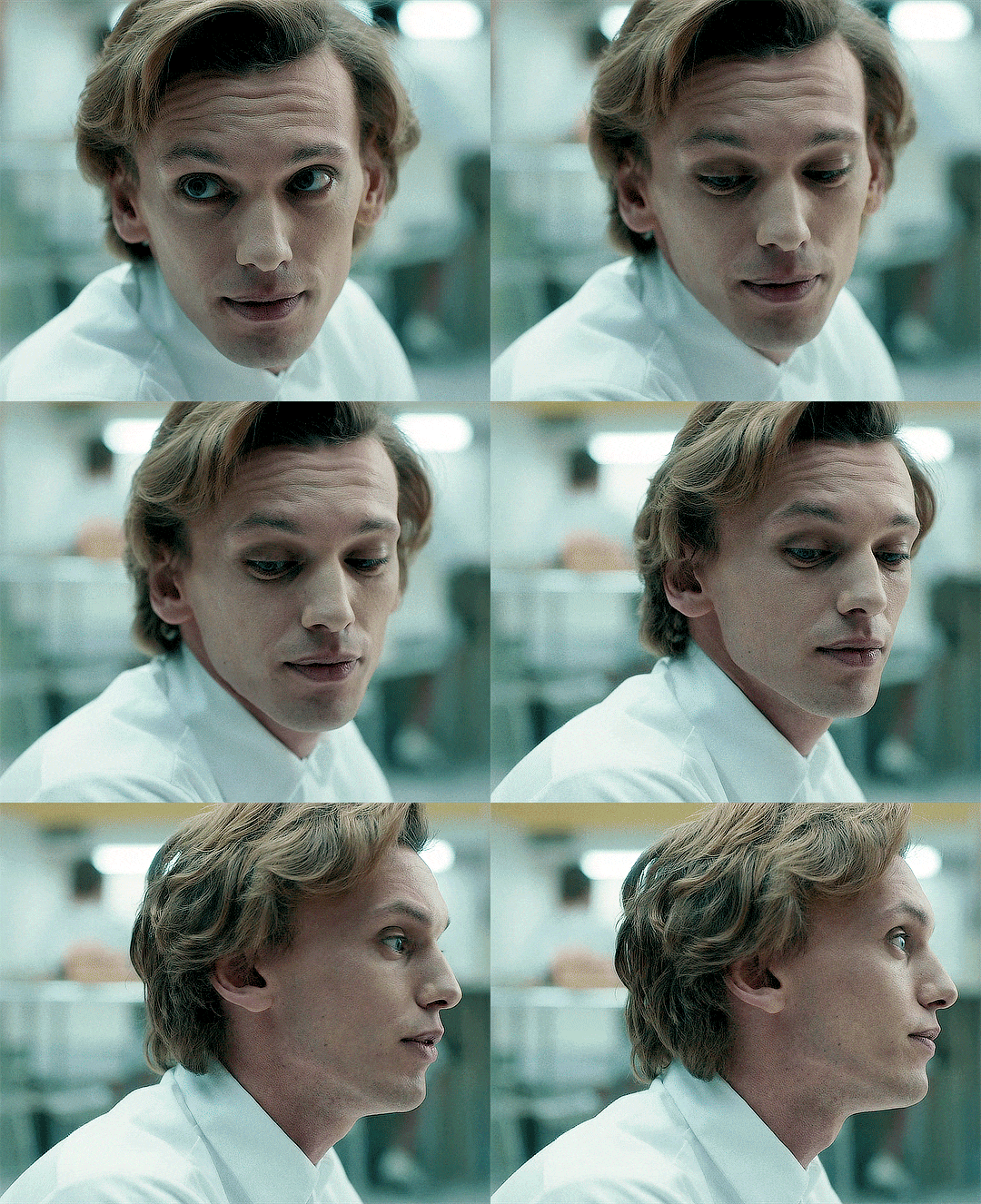
MEDICAL INFORMATION: Well, assuming he's in a game where he's in his human form again, he appears as a physically healthy human male.
OFFENSIVE SUBJECTS & TRIGGERS:
THREADHOPPING: In text threads, sure! If the conversation is particularly serious and you're not sure, feel free to ask.
FOURTHWALLING: If the name Vecna happens to come up, and your character would know it from D&D, then sure! But I would like to avoid anything more than that.
NOT INTERESTED IN: N/A
AURAL:
OLFACTORY: Clean linen.
DEMEANOUR: Polite, unassuming, maybe a little off-putting for reasons otherwise hard to pin down. Very presentable, neat and clean, and stands with perfect posture, except when he's manifesting the man_standing emoji. Sometimes makes backhanded, wry comments, while still framing himself as being "nice".